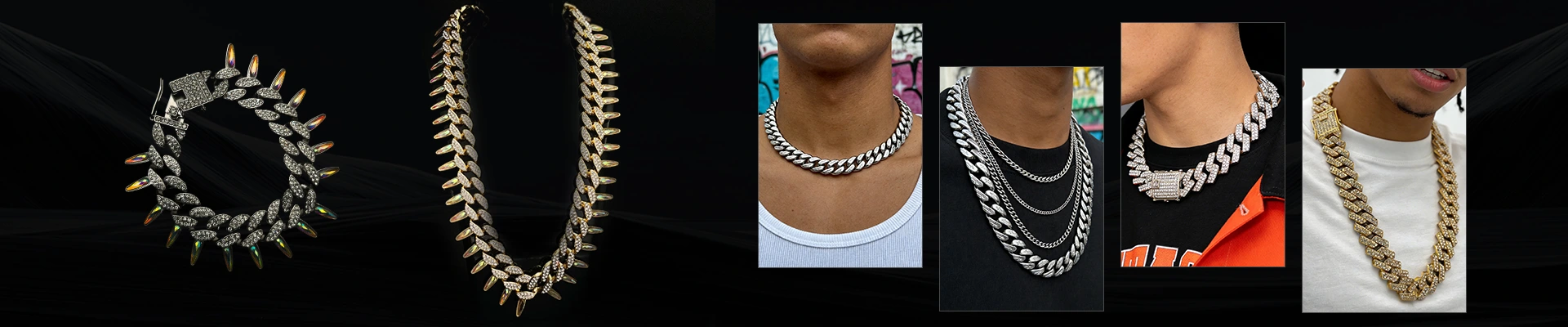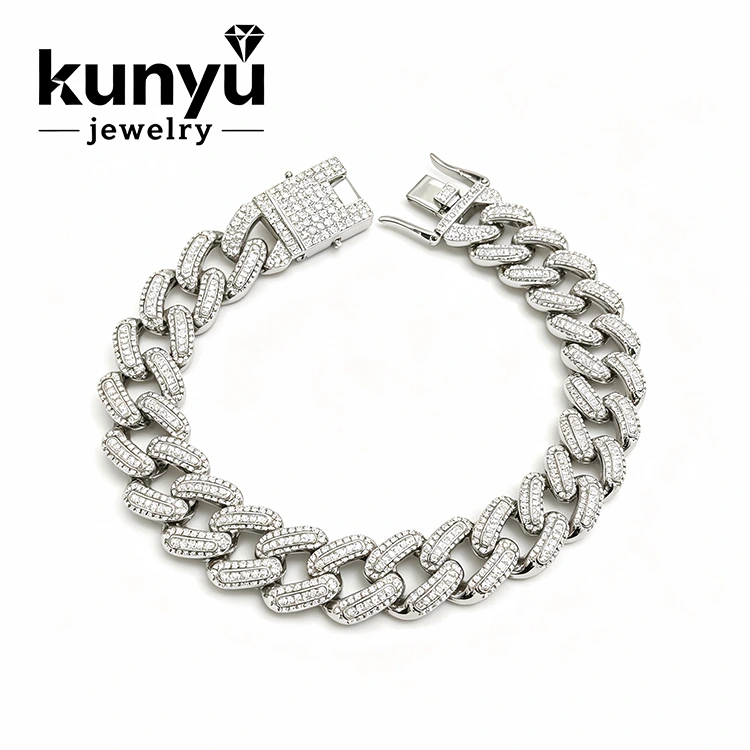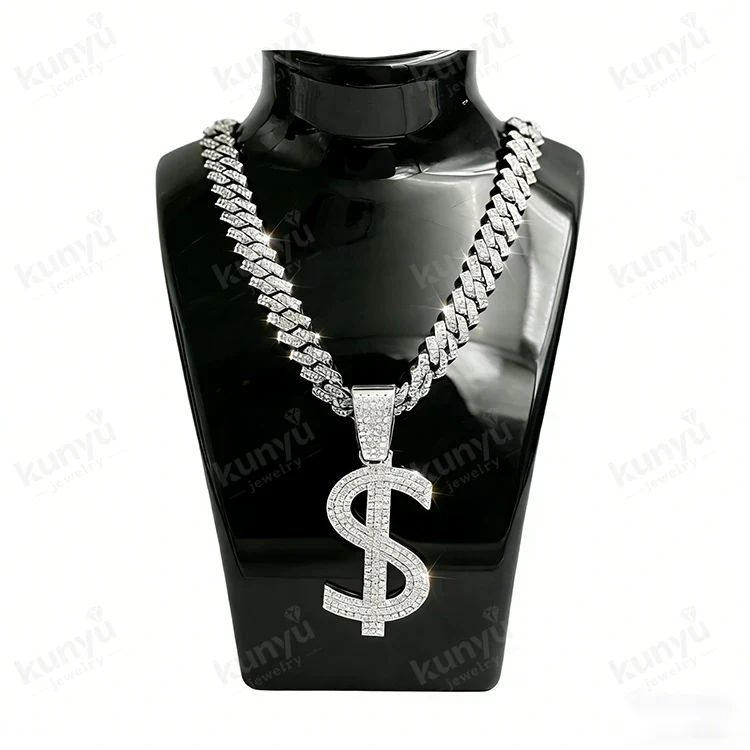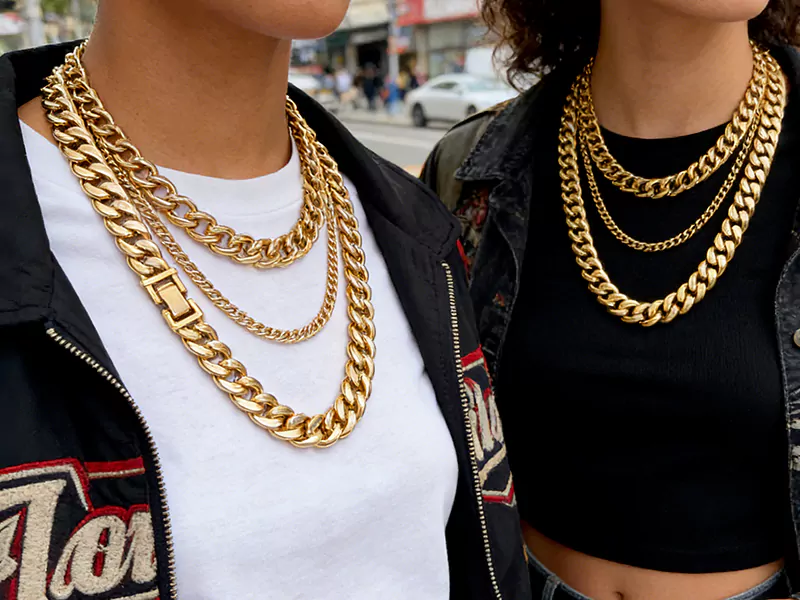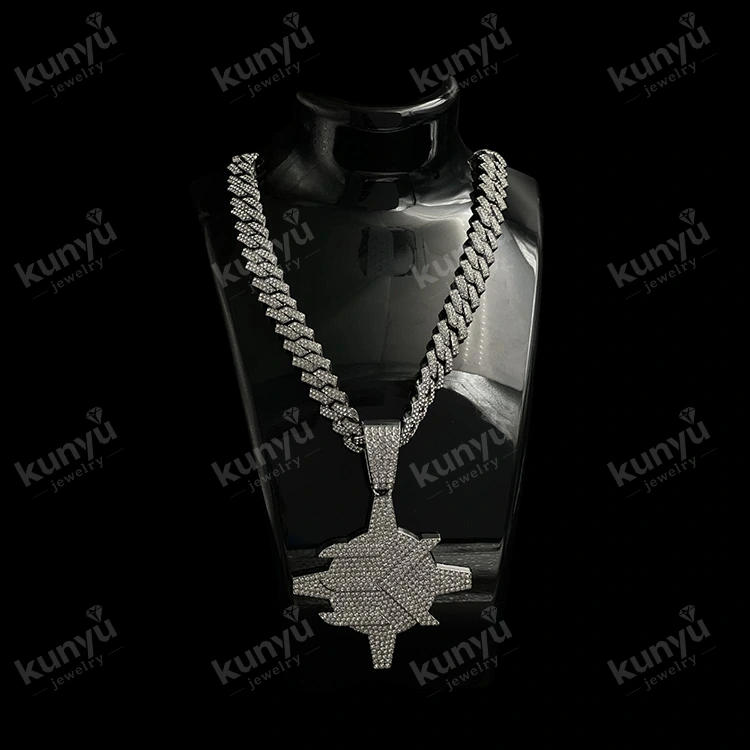
If the necklace tells the story, the hip hop chain is the foundation upon which that story is built. It's the essential, timeless element of the culture's jewelry lexicon. The chain represents strength, connection, and unbroken flow—much like the music itself. Its weight and substance are crucial; a thin chain simply won't do. It must have presence, a physical reminder of its value and the weight of the wearer's journey.
Classic styles are revered. The Cuban link chain, with its flat, interlocking, uniformly sized links, is perhaps the most iconic. It symbolizes solidarity and unbreakable bonds. The Figaro chain, with its pattern of two or three small circles followed by an elongated oval, offers a more intricate, classic aesthetic. The rope chain, essential for its flexibility and brilliant light-catching facets, remains a perennial favorite for layering or wearing solo. These designs form the backbone of hip hop's visual identity.
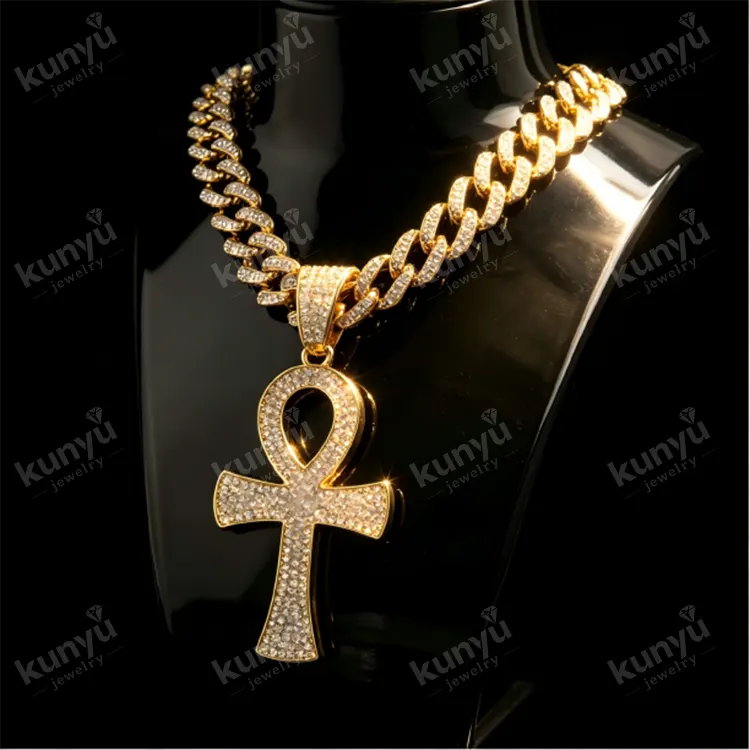
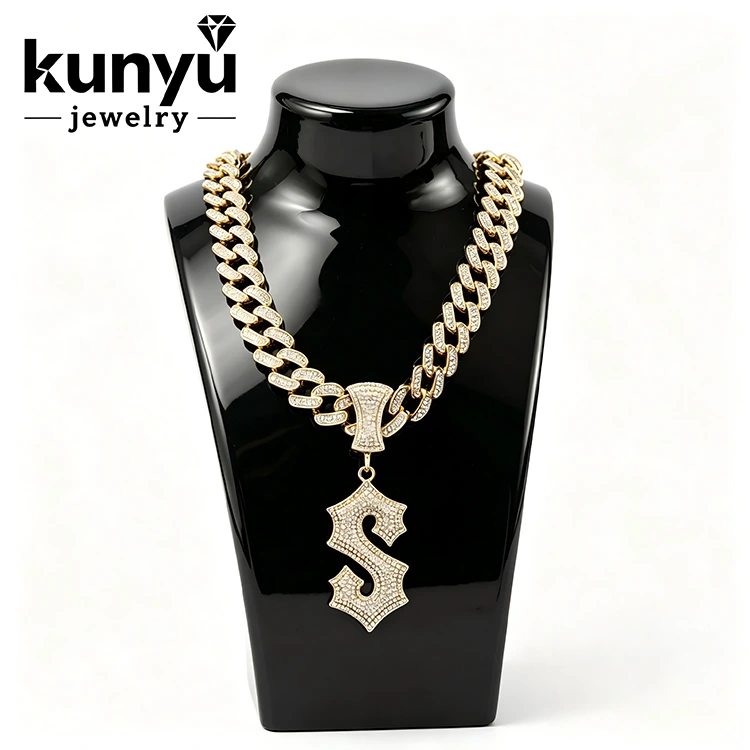
Today, the chain is both a tribute to tradition and a showcase for innovation. Layering multiple chains of different lengths and styles—a Cuban, a rope, a Figaro—creates a textured, personal armor. The chain itself has also become a focal point for embellishment, with entire chains being paved in diamonds ("iced out") or crafted from alternative metals like platinum. It can be worn without a pendant, letting the craftsmanship and sheer brilliance speak for itself. From the classic gold ropes of the 80s to the iced-out masterpieces of today, the chain remains the indispensable, foundational element of hip hop jewelry. It’s the link between generations of artists, a symbol of continuity, and the first step in adorning oneself with the culture's hard-earned glory.
We use cookies to offer you a better browsing experience, analyze site traffic and personalize content. By using this site, you agree to our use of cookies.
Privacy Policy